
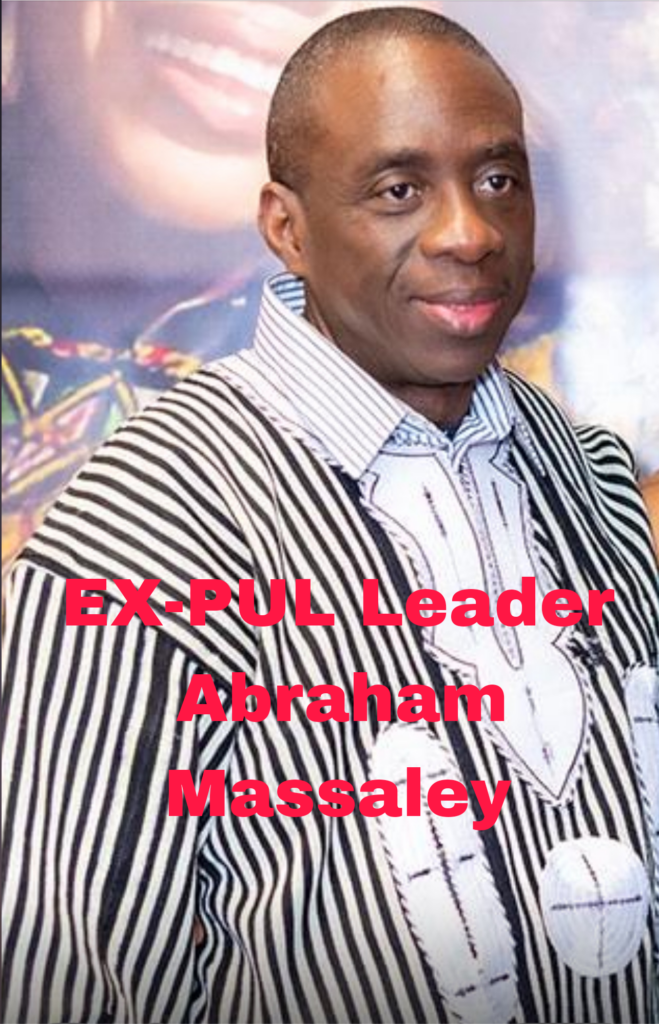
By Staff writer
Former President of the Press Union of Liberia (PUL), Mr. Abraham G. Massaley, has said Grand Cape Mount County is being treated as a “cash cow” or “looting ground,” where so-called investors extract gold and other resources with the silent approval and active cooperation of most leaders, while the county grapples with widespread poverty and hardship.
He described the situation as one marked by nearly 80 percent unemployment or lack of stable jobs, particularly among young people, alongside infrastructural collapse, gross underdevelopment, pollution of rivers and waterways, poor access to healthcare, and one of the highest illiteracy rates in the country.
Mr. Massaley lamented that Cape Mount remains the second poorest county in Liberia despite its vast gold resources. “What is most painful is that this exploitation is happening in broad daylight with the support of most of our leaders,” he said, adding that exploitation thrives on permission and corruption. According to him, investors view the county’s poverty not as a problem to solve, but as a weakness to exploit.
The former PUL President, who also once headed the National Association of Cape Mountainians in the Americas (NACA), made the remarks in Robertsport during the One Cape Mountainians Conference. He referenced a recent visit by the Liberian Vice President to Bea Mountain, where the company’s annual gold output was reportedly put at about US$1.65 billion.
He argued that poverty and suffering are often the result of leadership without character. “A leader without character uses power for himself, but a leader with character uses power to serve the people,” he said. “When character is absent in leadership, corruption becomes normal, accountability disappears, and impunity thrives. Public office without character is dangerous, and education without character corrupts.”
Mr. Massaley also challenged citizens to reflect on their role in perpetuating poor governance, noting that during elections, votes are often influenced by small handouts rather than policies, competence, or vision. “A few dollars and cups of rice will not build roads, provide healthcare, or secure a better future for our children,” he said, warning that dependency on handouts entrenches poverty.
Despite the challenges, he expressed optimism about the county’s future, predicting that Robertsport could become a major port city and a hub for international tourism and West African commerce. He also envisioned towns like Sinje and Tieni evolving into commercial and manufacturing centers linked to the ECOWAS market.
He highlighted Cape Mount’s natural endowments, including gold, diamonds, iron ore, and scenic beaches, as key assets that could transform the county into an “entrepreneurial giant” with thriving sectors in mining, tourism, fisheries, agriculture, and hospitality.
Mr. Massaley further predicted large-scale job creation that could curb youth migration to Monrovia, alongside the development of modern road networks connecting towns and villages. However, he stressed that meaningful change requires a shift in mindset. “Nothing will change until we change what we accept,” he said.
He cautioned chiefs and youth leaders against prioritizing personal gain over community interests, emphasizing that leadership should be about advocacy and protection of the people, not personal survival.
On mining activities, particularly at Bea Mountain, Mr. Massaley raised concerns about the long-term environmental and social impact of gold exploration. He questioned whether major towns like Tieni, Sinje, Damballa, Lofa Bridge, and Bo could face permanent landscape destruction if gold is discovered there.
He warned against the displacement of communities without adequate compensation, citing the pollution of the Mafa River and Marvoe Creek as examples of the environmental toll. “It sends shivers down my spine,” he said, describing the situation as inhumane, where already vulnerable people are left poorer, displaced, and exploited.
He criticized what he called the practice of offering “financial crumbs” to desperate and largely uninformed residents, arguing that such actions take advantage of their vulnerability rather than improving their living conditions.