
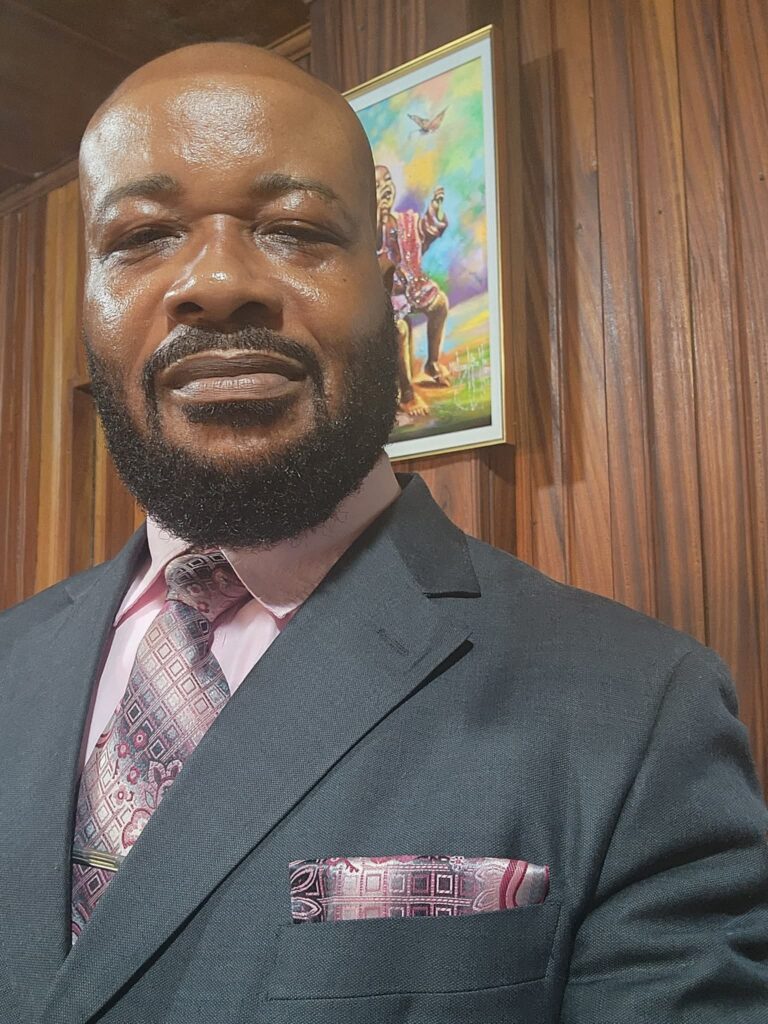
Cllr. Luther N. Yorfee is a Liberian lawyer, former presidential candidate, and the founder and visionary leader of the Liberia Rebuilding Party (also referred to as The REBUILDERS) has called on members of the Liberian Legislature to carefully review the proposed US$5.68 billion Master Infrastructure Development Agreement (MIDA) between the Government of Liberia and Bea Mountain Mining Corporation (BMMC), warning that the deal could carry significant financial and social risks if approved without additional safeguards.
In a press release issued over the weekend Cllr. Yorfee explained the agreement in simple terms, outlining its potential benefits, financial obligations and areas he believes lawmakers should address before ratification.
According to Yorfee, President Joseph Nyuma Boakai and BMMC signed the agreement on November 25, 2026. However, he noted that the agreement must still receive legislative approval before taking full effect.
Under the arrangement, BMMC is expected to finance and construct major public infrastructure projects, including roads and electricity facilities. Rather than making direct cash repayments, the government would reimburse the company through deductions from taxes and other payments it would otherwise owe the state.
Yorfee said the main infrastructure projects are estimated at approximately US$4.451 billion, while additional secondary roads and power lines could increase the total to about US$5.681 billion.
He also drew attention to a proposed US$500 million revolving funding facility, through which project expenditures would be reimbursed with interest through tax deductions.
Potential benefits of the agreement
Yorfee acknowledged that the agreement could provide important infrastructure benefits if properly implemented.
Among the expected , he highlighted plans to add approximately 270 megawatts of electricity generation capacity, which he said could significantly increase Liberia’s current power supply.
He also argued that the arrangement could help transform the country’s mineral wealth into long-term public assets, particularly roads and electricity infrastructure.
Another potential benefit, according to the lawyer, is that the arrangement would not operate like a conventional foreign loan requiring immediate cash repayments through the issuance of government bonds or traditional borrowing.
He further stated that completed infrastructure projects would belong to the Government of Liberia and be operated through relevant public institutions, including the Liberia Electricity Corporation and the Ministry of Public Works.
Financial and contractual risks
Despite the potential benefits, Yorfee warned that the agreement should not be regarded as free investment.
He explained that tax deductions would reduce the revenue available to the government for salaries, healthcare, education and other public services.
He raised particular concern about Article 9, which he said allows project costs to be deducted from several categories of taxes and government revenue.
The lawyer also questioned the procurement arrangement under Article 31.3, which he said identifies MAPA, a company linked to BMMC’s Turkish parent group, as the project contractor without the usual open competitive bidding process.
Yorfee argued that lawmakers should examine whether the arrangement complies with Liberia’s public procurement requirements and whether adequate safeguards exist to protect public funds.
He also raised concerns about quarterly compound interest, cost adjustments and the possibility of government liabilities increasing beyond the initial project estimates.
On the agreement’s long-term implications, Yorfee warned that stabilization and other contractual protections could restrict the ability of future governments to change certain financial and tax terms.
Communities and environmental concerns
The lawyer further cautioned that the proposed reservoir developments could affect communities and the environment.
He cited concerns about the potential flooding of more than 446 square kilometers of land and the possible displacement of residents.
According to his analysis, the agreement provides approximately US$50 million for land acquisition and relocation, an amount he believes requires further scrutiny to determine whether it would adequately address the potential impact on affected communities.
He also questioned whether the agreement sufficiently addresses the cost of connecting electricity generation facilities to homes and businesses, including transformers, meters and local distribution lines.
Recommendations to lawmakers
To address the concerns, Yorfee urged lawmakers to introduce stronger safeguards before approving the agreement.
He recommended limiting the percentage of annual taxes and royalties that BMMC could deduct, while requiring the company to make a guaranteed minimum cash payment to the national government each year.
He also called for strict limits on project costs and interest, arguing that interest should only apply to verified funds actually disbursed for construction and other approved project expenses.
Other recommendations include:
Giving the General Auditing Commission and independent experts authority to audit project costs and verify invoices.
Providing lawmakers with sufficient time to examine bills and investigate possible irregularities.
Linking tax deductions to independently verified construction milestones rather than submitted invoices alone.
Requiring strong financial guarantees to protect the government if construction is suspended or the mining operation closes.
Completing environmental and social impact assessments before work begins in areas expected to be affected by reservoirs.
Establishing an adequately funded and independently managed relocation programme for affected communities.
Setting enforceable requirements for Liberian employment, local suppliers and subcontractors.
Providing a clear financing plan for electricity distribution so that additional power generation reaches homes and businesses.
Yorfee maintained that the Legislature should not approve the agreement without addressing what he described as its financial, legal, environmental and social risks.
His central argument is that Liberia must pursue infrastructure development without compromising the country’s future revenue, public accountability or the rights of affected communities.
“A hint to the wise is quite sufficient!” he concluded.
This report is based on the analysis provided by Cllr. Luther N. Yorfee. The financial, legal and technical claims in the analysis have not been independently verified by West Africa Voice.