Investigation Reveals Deepening Waste Crisis in Monrovia

An investigation conducted by West Africa Voice, an independent media group, has uncovered deep-rooted failures within Liberia’s waste management system, pointing to a crisis driven not only by capacity challenges but also by policy gaps, weak enforcement, and institutional neglect.
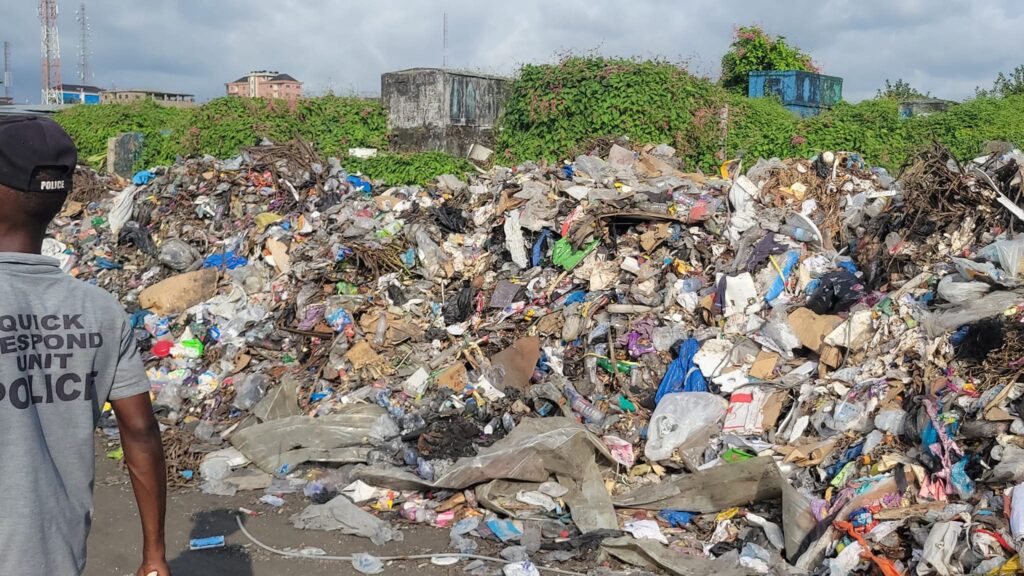
Findings from weeks of field assessments, stakeholder engagements, and community observations show that Monrovia’s growing mountains of waste are the visible outcome of a system under strain, struggling to respond to increasing urban demands.
The investigation established that only a portion of the waste generated daily is effectively collected, while the majority is either indiscriminately dumped, burned in open spaces, or left to clog drainage systems across the city.
It further revealed that the capital, with a population exceeding one million, relies heavily on just two major dumping sites—Stockton Creek and the Fiama dump in Sinkor—both operating beyond their intended capacity.
Major waste generators, including the Liberia Marketing Association (LMA), were also found to contribute significantly to the city’s waste burden, amid concerns over limited financial contributions toward waste disposal services.
According to the findings, the Monrovia City Corporation (MCC), which holds statutory responsibility for waste management, is operating under severe financial and logistical constraints, including limited budgetary support, inadequate equipment, and restricted revenue-generating authority.
The investigation also uncovered gaps in national support and coordination. The MCC was reportedly excluded from key government initiatives such as the Yellow Machine project, and no additional funding was allocated to the Corporation under the recent supplementary budget.
Institutional fragmentation continues to undermine efficiency, particularly in medical waste management, which falls under the National Public Health Institute of Liberia (NPHIL), creating coordination and implementation challenges.
These findings point to a system that is not only overwhelmed but structurally weakened, raising urgent concerns about public health, environmental safety, and the overall governance of urban sanitation in Liberia’s capital.
The Monrovia City Corporation has also lost a critical revenue stream, as it currently lacks access to collect real estate taxes under the Local Government Act—an avenue that could significantly strengthen its financial capacity. While the law empowers the Corporation to collect license fees, enforcement remains weak and far below its potential.
Further highlighting the scale of the challenge, the Mayor of Monrovia is reportedly still using a personal vehicle for official duties—an indication of the broader logistical and institutional constraints confronting the Corporation.
Collectively, the findings underscore a waste management system that is not only overwhelmed but structurally weakened. Without urgent reforms, increased funding, and stronger enforcement mechanisms, Monrovia’s sanitation crisis risks escalating further, posing serious threats to public health, environmental sustainability, and the overall livability of the capital. Investigation continues in our next editor.